
Japan Student Visa Application and Requirements

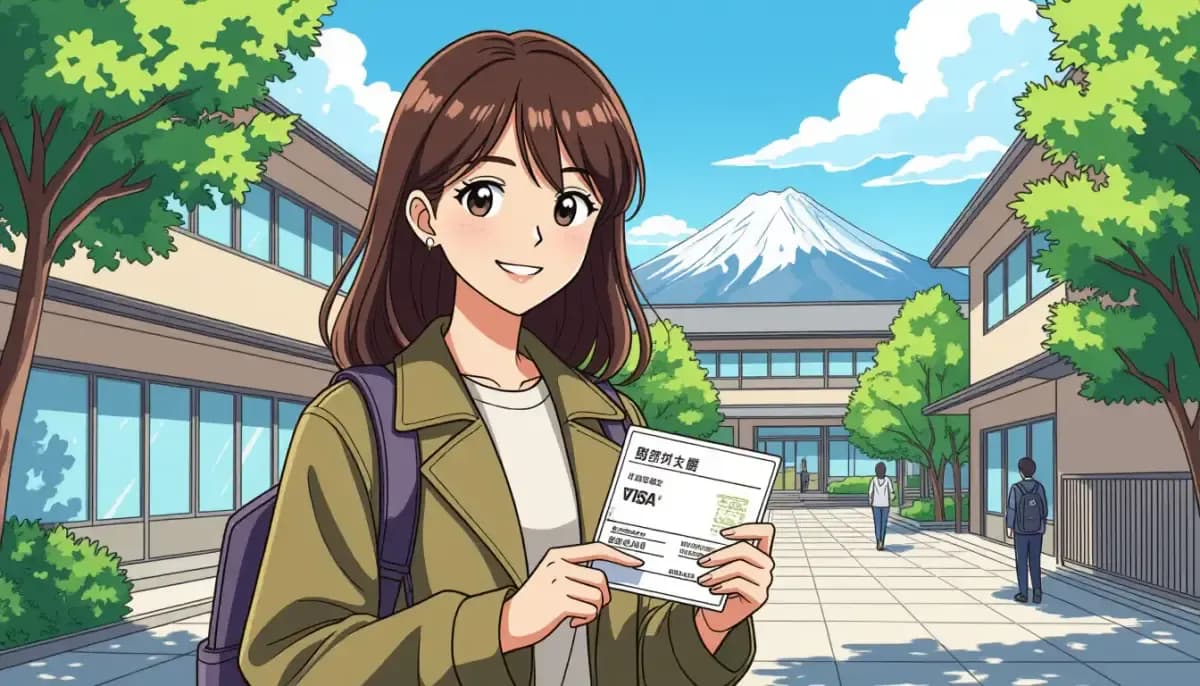
Step-by-step guide to Japan student visa requirements, COE application process, required documents, financial requirements, and timeline for international students.
Japan Student Visa Application and Requirements: The Complete Guide
Studying in Japan is a life-changing experience, but before you can set foot on campus, you'll need to navigate the Japanese student visa application process. Unlike many countries where you simply apply at an embassy and receive a visa, Japan has a unique two-step system centered on the Certificate of Eligibility (COE). This guide walks you through every step of the process, from gathering documents to arriving in Japan as a registered student.
!International student holding Certificate of Eligibility and passport in Japan

Understanding the Japan Student Visa System
Japan issues a "Student" status of residence (留学, ryūgaku) to foreign nationals studying at accredited universities, junior colleges, technical colleges, specialized training colleges, and Japanese language schools. This status allows you to stay in Japan for up to 4 years and 3 months, depending on your program.
The most critical point to understand from the outset is that you do not apply for the student visa yourself — at least not initially. The process has two distinct stages:
- Certificate of Eligibility (COE): Your school applies to Japan's Immigration Services Agency on your behalf
- Visa application: You apply at a Japanese embassy or consulate in your home country using the COE
This system means you must be fully accepted by a recognized Japanese institution before the visa process can even begin. Casual or conditional acceptances won't suffice — you need a formal enrollment letter.
For a broader overview of visa types in Japan, see our Complete Guide to Japan Visa and Immigration.
Step-by-Step: The Certificate of Eligibility (COE) Process
The COE is essentially an immigration pre-approval. Japan's Immigration Services Agency reviews your application to confirm you meet the requirements to live and study in Japan before you visit any embassy. This is what makes the Japan student visa process significantly more thorough than many other countries.
How the COE Application Works
- You are formally accepted by a Japanese school or university
- You submit your required documents to your institution
- The school submits the COE application to a Regional Immigration Services Bureau in Japan on your behalf
- The Immigration Services Agency processes the application (takes 1–3 months)
- The COE is issued and sent to you (usually digitally or by courier)
- You take the COE to a Japanese embassy or consulate
- Embassy issues your visa sticker (takes 5–10 business days)
Schools are evaluated on a trust scale by Japan's immigration authorities. More established institutions may have streamlined processing, while newer schools may face additional scrutiny. This is one reason why school choice matters not just academically, but administratively.
For more information on choosing the right educational program, see our Choosing a Japanese Language School Guide.
Required Documents for Japan Student Visa
Gathering the correct documents is crucial. Missing or incorrect documentation is the most common cause of delays. Below is a comprehensive checklist:
Documents for the COE Application (Submitted by Your School)
| Document | Details |
|---|---|
| Application form | Completed digitally; no blank fields (use "N/A") |
| Passport copy | Identity page; must be valid beyond your study period |
| Academic credentials | Highest diploma, official transcripts |
| Employment certificate | Required if you are currently employed |
| Financial proof | Bank balance certificate (approx. ¥2,000,000+) |
| Guarantor income proof | Tax documents, pay stubs, employment certificate |
| Financial sponsorship letter | Written by your financial guarantor |
| Proof of relationship | Birth certificate or legal documents showing relationship to guarantor |
| Photographs | Plain background, face-forward, within 3 months |
Documents for the Visa Application at the Embassy
| Document | Details |
|---|---|
| Valid passport | 6+ months validity recommended |
| Certificate of Eligibility | Original + photocopy (or electronic version) |
| Visa application form | Provided by the Japanese mission |
| Passport-size photo | 45mm × 35mm, color, within 3 months |
| Visa fee | Approx. ¥3,000 single-entry, ¥6,000 multiple-entry |
Requirements vary by embassy and nationality, so always confirm with your local Japanese embassy or consulate.
For detailed guidance on the student visa renewal process, Living in Nihon's student visa guide covers renewal procedures and status extensions in depth.
Financial Requirements: What Immigration Really Looks For
Financial documentation is the most scrutinized part of the COE application. Japan's immigration authorities want to confirm that you can support yourself throughout your studies without becoming a burden on the state or resorting to illegal work.
The baseline financial requirement is approximately ¥2,000,000 (around USD $13,000–$15,000) for one year of combined tuition and living expenses. In Tokyo or other major cities, you may need to demonstrate even more — some schools recommend ¥2,500,000 or higher.
Critical financial tips:
- Stability matters more than the amount. Immigration officers specifically look for funds that have been in the account for several months. A large transfer made immediately before applying is a serious red flag and can trigger additional verification or outright rejection.
- Joint accounts are acceptable but require documentation showing your access to the funds.
- Scholarship letters count. If you have a MEXT scholarship or other institutional funding, include official documentation — this significantly strengthens your application.
- Income from a guarantor abroad is valid. If your parents or another sponsor is funding your studies, their income and tax documents are required alongside the sponsorship letter.
Understanding the full cost of living in Japan will help you plan your financial documentation. Our Complete Guide to Cost of Living in Japan provides detailed breakdowns by city and lifestyle.
Timeline: When to Start the Application Process
One of the most common mistakes students make is underestimating how long the Japan student visa process takes. The total timeline from starting your COE application to receiving your visa can range from 2 to 4 months. During peak seasons (April and October intake periods), processing times can stretch longer.
| Stage | Timeline |
|---|---|
| Gather and submit documents to school | 1–2 months before COE submission |
| School submits COE application | 5–7 months before program start |
| COE processing by Immigration Services Agency | 1–3 months |
| COE delivery to student | 1–2 weeks after approval |
| Embassy visa application | 2 months before program start |
| Visa processing at embassy | 5–10 business days |
| Total recommended buffer | Start 4–6 months before program start |
Peak seasons to be aware of:
- April intake: Applications spike December through February
- October intake: Applications spike June through August
During these periods, immigration offices are overwhelmed, and both COE and visa processing times can extend significantly. Starting early is not just advisable — it's essential.
!Student visa timeline and document checklist for Japan

Working While on a Student Visa
Most students need to supplement their income during their studies, and Japan allows this — within limits.
To work part-time, you must apply for Permission for Activity Outside Status of Residence (資格外活動許可, shikakugai katsudō kyoka). This is usually processed alongside your COE or residence card at immigration.
Part-time work limits for students:
- Regular term: Up to 28 hours per week
- Long school holidays (summer, winter, spring): Up to 40 hours per week
- Type of work: Most service and retail jobs are allowed; adult entertainment is strictly prohibited
Violations of the work limit can result in visa non-renewal or even deportation. Japan takes these rules seriously, and some employers will ask to see your residence card to verify your permitted work hours.
For students who complete their degrees in Japan and wish to work, the transition from student visa to work visa is a separate process. For Work in Japan's guide on transitioning from student to professional status provides comprehensive information on navigating this career transition.
After Arrival: Residence Card and Municipal Registration
Your student visa is just the beginning. Once you land in Japan, there are two critical administrative steps you must complete:
1. Receive Your Residence Card at the Airport
At major international airports (Narita, Haneda, Kansai, Chubu, Fukuoka, New Chitose, Hiroshima, Naha), eligible foreign residents receive their Residence Card (在留カード, zairyū kādo) at immigration upon entry. This card is your primary form of ID in Japan and must be carried at all times.
Your residence card shows:
- Your name, nationality, and date of birth
- Your status of residence ("Student")
- Your permitted period of stay
- Whether you have permission to work
2. Register at Your Municipal Office Within 14 Days
After confirming your address (whether university dormitory or private apartment), you must register at your local city hall or ward office within 14 days. This establishes your official address in Japan, which you'll need for:
- Opening a bank account
- Getting a Japanese SIM card or phone plan
- Accessing national health insurance
- Receiving official mail and important documents
The municipal registration process takes about 30 minutes. Bring your passport, residence card, and your lease agreement or dormitory confirmation letter.
For more on settling into daily life in Japan, our Complete Guide to Daily Life in Japan for Foreigners covers everything from banking to healthcare.
Extending and Renewing Your Student Visa
Student visas are issued with a validity of 1 year 3 months or 2 years 3 months, depending on your program length and the immigration office's assessment of your application.
If your program lasts longer than your initial visa period, you must apply for a renewal at least 3 months before your current status expires. Renewal applications are submitted directly to the Regional Immigration Services Bureau (or online through the Immigration Services Agency portal).
Requirements for renewal:
- Proof of continued enrollment
- Transcripts showing academic progress (failing grades can cause issues)
- Updated financial documentation
- Current residence card
If you plan to stay in Japan after graduation to search for employment, you can apply for "Specific Activities" (特定活動) status, which allows up to one additional year for job hunting. This is a temporary bridge status — not a permanent solution — but it's commonly used by international graduates who want to pursue working in Japan as a foreigner.
Common Mistakes and How to Avoid Them
Based on the experiences of thousands of international students, these are the most common issues that cause student visa applications to be delayed or rejected:
1. Starting too late Begin the process at least 4–6 months before your intended start date. Once you've selected a school, ask about the COE submission process immediately.
2. Unstable financial documentation Moving large sums into your account right before applying is the most common financial red flag. Establish a stable savings history months in advance.
3. Incomplete application forms Every field on the COE application must be completed. Use "N/A" for fields that don't apply. Blank fields trigger delays for additional information.
4. Mismatched information Your name, date of birth, and other personal details must match exactly across all documents. Even minor discrepancies (different romanizations of your name) can cause problems.
5. Not explaining gaps If there are gaps in your education or employment history, include a brief written explanation. Transparency is valued; unexplained gaps raise questions.
6. Choosing an unaccredited school Only schools authorized by Japan's Ministry of Education (MEXT) or the Immigration Services Agency can sponsor student visas. Verify your school's accreditation status before applying.
For more resources on studying in Japan, Ittenshoku's career development resources offer guidance on leveraging your Japan education experience for professional growth.
Frequently Asked Questions
Can I apply for a Japan student visa without going through my school? No. The COE must be applied for by the school on your behalf. You cannot submit the COE application directly to immigration authorities.
Can I enter Japan while waiting for my COE? You can enter Japan as a temporary visitor (tourist visa or visa-free) for short stays, but you cannot begin studying. Once your COE and student visa are issued, you'll enter with your student status.
What happens if my student visa is denied? Contact your school immediately. They can often advise on what went wrong and whether reapplication is possible. Common causes include insufficient financial documentation or discrepancies in your application.
Can family members accompany me on a student visa? Spouses and children of student visa holders can apply for a dependent (家族滞在, kazoku taizai) visa. Dependents generally cannot work more than 28 hours per week, similar to students.
Do I need to speak Japanese to get a student visa? No Japanese language proficiency is required to obtain the visa itself. However, if you're applying to a university with Japanese-language instruction, you'll typically need to demonstrate language ability through JLPT or similar tests for admission.
Summary: Key Takeaways for Japan Student Visa Applicants
Obtaining a Japan student visa is a structured, thorough process that rewards careful preparation:
- Start 4–6 months early to account for COE processing (1–3 months) plus embassy processing (5–10 business days)
- Your school does the heavy lifting — the COE is submitted by your institution, not by you
- Financial stability is critical — maintain at least ¥2,000,000 in a stable account for several months before applying
- Students can work up to 28 hours per week with the appropriate work permission
- Register at your local municipal office within 14 days of settling at your address in Japan
- Renewals are possible as long as you maintain enrollment and academic progress
The process is more complex than many countries' student visa systems, but Japan's thoroughness reflects its commitment to supporting genuine students. With proper preparation, the application process is entirely manageable — and the reward is the opportunity to experience one of the world's most fascinating cultures firsthand.
Sources:

Originally from Vietnam, living in Japan for 16+ years. Graduated from Nagoya University, with 11 years of professional experience at Japanese and international companies. Sharing information about living in Japan for foreigners.
View Profile →Related Articles

English Taught MBA Programs in Japan Guide
Discover the best English-taught MBA programs in Japan for international students. Compare Hitotsubashi, Waseda, NUCB, GLOBIS and more — tuition, requirements, scholarships, and career outcomes covered.
Read more →
Graduating in Japan and Starting Your Job Hunt
Complete guide for foreign students graduating in Japan and starting a job hunt. Learn about shinsotsu saiyō, visas, platforms, language requirements, and application tips for 2025.
Read more →
Student Health Insurance in Japan Guide
Everything international students need to know about health insurance in Japan — NHI enrollment, costs, reductions, Gakkensai, and how to get coverage fast after arriving.
Read more →
Student Housing Options and Dormitories in Japan
Discover all student housing options in Japan: university dorms, share houses, student apartments, and private rentals. Costs, tips, and how to apply as an international student.
Read more →
Vocational and Technical Schools in Japan Guide
Complete guide to vocational schools (senmon gakko) in Japan for foreigners. Learn about admission requirements, costs, visa rules, fields of study, and career pathways after graduation.
Read more →
Research Programs and Graduate School in Japan
Complete guide to graduate school and research programs in Japan for foreigners. Learn about MEXT scholarships, English programs, application process, costs, and top universities.
Read more →