
Cultural Barriers to Friendship in Japan and How to Overcome Them

Discover the key cultural barriers to making friends in Japan — from uchi-soto dynamics to tatemae — and get practical strategies to build genuine Japanese friendships as a foreigner.
Cultural Barriers to Friendship in Japan and How to Overcome Them
Moving to Japan is an exciting adventure, but many foreigners quickly discover that building genuine friendships with Japanese people is more challenging than they expected. The social landscape operates by a different set of rules — subtle, deeply ingrained, and often invisible to outsiders. Understanding these cultural barriers is the first step to breaking through them and building the meaningful connections that make life in Japan truly rewarding.
This guide breaks down the key cultural barriers to friendship in Japan and gives you practical, tested strategies to overcome them.
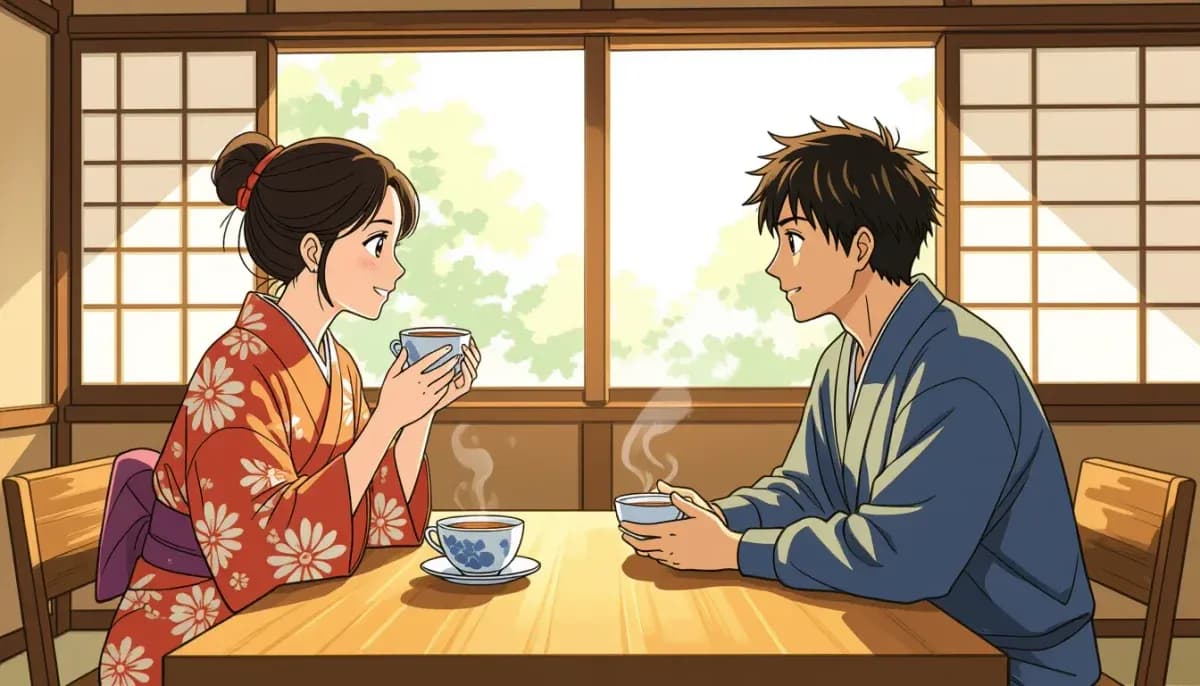
!Foreigner and Japanese person sharing conversation over tea in Japan

Understanding Uchi and Soto: Japan's In-Group and Out-Group Dynamic
The most fundamental cultural concept shaping Japanese social life is uchi (内) and soto (外) — inside and outside. In Japanese society, everyone is categorized as either inside your group or outside it, and the rules for interaction change dramatically depending on which category you fall into.
As a foreigner, you start as soto by default. This doesn't mean Japanese people dislike you — it simply means they haven't yet placed you inside their trusted circle. The challenge is that, for many Japanese people, foreigners are automatically perceived as temporary visitors, making them hesitant to invest emotional energy in a friendship that might not last.
How to navigate uchi-soto:
- Join structured groups (sports clubs, hobby circles, neighborhood associations) where group membership automatically moves you toward uchi status
- Demonstrate long-term commitment — mention your plans to stay in Japan, learn Japanese, settle down
- Show reliability: consistent attendance, punctuality, and follow-through on commitments signals you're worth including
Once you're inside a group and prove you're here to stay, Japanese friendships tend to become extremely loyal and deeply supportive.
Tatemae vs. Honne: The Public Face vs. True Feelings
Another major barrier is the Japanese cultural practice of tatemae (建前) — the polite, socially appropriate public face — versus honne (本音), one's true feelings and desires. In daily interactions, Japanese people default to tatemae: agreeable, harmonious, non-confrontational.
For foreigners accustomed to direct communication, this can be deeply confusing. Someone may agree enthusiastically in person but never follow up. A colleague who seems like a close friend may never invite you to their home. This isn't dishonesty — it's a deeply embedded social lubricant that keeps harmony intact.
How to navigate tatemae and honne:
- Read between the lines: a vague "that might be difficult" is often a polite "no"
- Don't take surface-level agreement at face value — follow up gently to gauge real interest
- Share your own true feelings gradually and authentically, creating space for reciprocal openness
- Patient, low-pressure social interactions over time encourage honne to emerge
The more trust you build through consistent, respectful interactions, the more you'll experience the warm, genuine side of Japanese friendships.
Language Barriers: More Than Just Vocabulary
Language is the obvious barrier, but its impact goes deeper than most people realize. Many Japanese people have studied English for years but lack confidence speaking it. This creates social anxiety — they fear embarrassment or being misunderstood, so they actively avoid situations where they might need to use English. This can manifest as what expats call "the gaijin seat" — empty seats next to foreigners on trains or buses, reflecting anxiety rather than hostility.
The good news: even basic Japanese dramatically changes your social experience.
| Japanese Skill Level | Social Impact |
|---|---|
| None | High anxiety for Japanese people; limited casual interaction |
| Basic phrases (N5-N4) | Japanese people relax visibly; more willing to approach |
| Conversational (N3) | Able to join hobby groups and workplace socializing |
| Intermediate (N2+) | Deep friendships possible; access to Japanese social circles |
| Advanced (N1) | Treated largely as a social equal; full integration possible |
Language tips:
- Learn greetings and polite small talk — even ten phrases makes a difference
- Use Japanese first, switch to English only if needed — this shows effort and respect
- Join language exchange groups where both parties are learning; these create natural, balanced friendships
- Watch Japanese TV shows and listen to music — cultural references are social currency
For resources on learning Japanese, check out our guide on learning Japanese as a foreigner.
Senpai-Kohai Hierarchies and Indirect Communication
Japanese social structures are built on senpai (先輩) (senior) and kohai (後輩) (junior) relationships. These hierarchies govern how people speak to each other, who initiates social plans, and how much informality is acceptable. For foreigners unfamiliar with these dynamics, well-intentioned behavior can accidentally come across as disrespectful.
Indirect communication is another layer. Japanese people rarely say "no" directly, rarely express displeasure openly, and rarely initiate confrontation. Social signals are subtle — a pause, a change of subject, a "hmm, let me think about it" — all communicate meaning that directness-trained foreigners often miss.
How to adapt:
- Observe group dynamics before jumping in — notice who defers to whom
- Use appropriate keigo (polite language) in formal settings; it shows cultural awareness
- Don't push for direct answers; offer multiple options so people can decline gracefully
- When in doubt, err on the side of more formal rather than less
For deeper insight into Japanese etiquette, our guide on Japanese culture and etiquette covers these dynamics comprehensively.
The Slow Build: Friendship Takes Time in Japan
In many Western cultures, a lively conversation at a party can quickly lead to exchanging numbers, making plans, and forming a friendship in days. In Japan, friendship typically builds much more slowly — through repeated, low-pressure contact over weeks and months. A colleague you've had lunch with twice a week for a month is much closer to becoming a real friend than someone you had one long, deep conversation with.
This can feel frustrating, especially if you're new to Japan and craving connection. But understanding that this is cultural — not personal — helps enormously.
Practical strategies:
- Commit to recurring activities: weekly badminton, monthly book club, regular language exchange — consistency is the engine of Japanese friendship
- Show up even when it's inconvenient; reliability is noticed and valued
- Participate in group outings like nomikai (drinking parties) — these are key social rituals where walls come down
- Bring omiyage (small souvenirs or snacks) from trips — this thoughtful gesture signals warmth and belonging
!Foreigners joining a Japanese hobby club or social activity

Cultural Assumptions About Foreigners: The "Gaijin Card"
One underappreciated barrier is the set of assumptions many Japanese people hold about foreigners: that we're here temporarily, that we don't speak Japanese, that we don't understand customs, or that we need special treatment. These assumptions — while often well-meaning — create distance rather than connection.
Some foreigners inadvertently reinforce these assumptions by staying in expat bubbles, speaking only English, or visibly struggling with basic cultural practices. This can make it harder to be seen as a person rather than a "foreigner."
How to challenge these assumptions:
- Show cultural engagement: try local foods, participate in local events, attend matsuri (festivals)
- Don't immediately default to English — attempt Japanese first
- Express genuine interest in Japan — not just sushi and anime, but local politics, regional culture, neighborhood news
- Be visibly part of the community: volunteer, shop at local stores, greet neighbors
Our guide to making friends and social life in Japan covers practical venues and methods for building genuine connections.
Practical Venues and Strategies for Breaking Through
Knowing the barriers is only half the battle — you need concrete places and strategies to meet people.
Best environments for forming friendships in Japan:
- Hobby and interest clubs (サークル): Sports, arts, crafts, language — join a recurring group activity
- Language exchanges: Meetup.com, HelloTalk, Tandem — bilateral learning creates natural friendships
- Nomikai and workplace events: Attending shows you're committed to the team
- Neighborhood associations (町内会): Gets you known in your local community
- Volunteering: Animal shelters, beach cleanups, international support centers attract community-minded people
- International events: Mixing expat and Japanese attendees, often more casual and open
For more on finding hobby groups and sports clubs in Japan, For Work in Japan's guide on sports clubs and hobby groups offers detailed practical advice.
For broader expat community resources, Living in Nihon covers community building and integration strategies for foreigners across Japan.
For career networking in Japan, Ittenshoku provides resources on building professional connections in Japan's IT and business sectors.
Gift-Giving and Thoughtful Gestures as Social Tools
In Japanese culture, omiyage (お土産) — small gifts or snacks brought back from travels — play an outsized social role. Bringing treats to share with coworkers or club members after a trip is a standard ritual that signals belonging and thoughtfulness. It's a low-pressure, universally appreciated way to strengthen casual acquaintanceships.
Other thoughtful gestures that open social doors:
- Remembering and following up on things people mentioned (a sick family member, an upcoming event)
- Offering help proactively and sincerely
- Showing interest in people's hobbies and asking follow-up questions
These small acts of care speak louder in Japan's relationship culture than bold gestures of friendship.
When You Feel Like You're Not Getting Through
Despite your best efforts, there will be moments of frustration — times when you feel invisible, misunderstood, or perpetually on the outside. This is normal, even for people who have lived in Japan for years. Social isolation is a documented challenge for foreign residents in Japan.
What helps:
- Maintain connections with your home country and expat friends — these provide emotional support while local friendships develop
- Be patient and realistic about the timeline — deep Japanese friendships often take a year or more to form
- Celebrate small wins: a colleague who initiates lunch, a neighbor who waves warmly, a club member who remembers your name
- Seek professional support if isolation becomes severe — Japan has mental health resources for foreigners
For insights on managing the emotional side of life in Japan, our guide to daily life in Japan as a foreigner includes mental health and community resources.
For research-based insights on making friends in Japan, Japan Handbook's guide to socializing and GaijinPot's friendship guide are excellent additional resources.
Key Takeaways: Building Real Friendships in Japan
Cultural barriers to friendship in Japan are real, but they're not insurmountable. The foreigners who build the deepest, most lasting connections with Japanese people share a few things in common: they learned at least some Japanese, they committed to recurring group activities, they showed cultural respect and curiosity, and they were patient.
Japan's social culture rewards consistency, sincerity, and long-term commitment. Once you're inside someone's uchi — once you're part of their trusted circle — Japanese friendships are among the warmest, most loyal, and most meaningful you'll ever experience.
Quick summary of strategies:
- Learn basic to conversational Japanese
- Join hobby clubs, sports teams, or neighborhood groups
- Attend nomikai and workplace social events
- Bring omiyage and practice thoughtful small gestures
- Read indirect communication signals carefully
- Commit to long-term residence and community participation
- Be patient — meaningful Japanese friendships take months, not days

Originally from Vietnam, living in Japan for 16+ years. Graduated from Nagoya University, with 11 years of professional experience at Japanese and international companies. Sharing information about living in Japan for foreigners.
View Profile →Related Articles
Building Relationships with Japanese Neighbors
Learn how to build genuine relationships with your Japanese neighbors. From moving-in gift etiquette to joining the chonaikai, this complete guide covers all the cultural norms foreigners need to know.
Read more →
Professional Networking Events in Japan for Foreigners
Discover the best professional networking events in Japan for foreigners. From chambers of commerce to startup meetups and career forums, build your network in Tokyo, Osaka, and beyond.
Read more →
How to Maintain Friendships Long Term in Japan
Learn how to maintain long-term friendships in Japan as a foreigner. Practical tips on LINE communication, omiyage culture, expat turnover, and building lasting bonds with Japanese friends.
Read more →
Best Online Communities and Forums for Expats in Japan
Discover the best online communities, forums, and social groups for expats living in Japan. From r/japanlife to InterNations and Tokyo Facebook groups — your complete guide to connecting.
Read more →
Joining Sports Clubs and Teams in Japan as a Foreigner
Complete guide to joining sports clubs and teams in Japan as a foreigner. Find expat-friendly clubs, understand costs, navigate language barriers, and build your social life through sport.
Read more →
Overcoming Social Isolation as a Foreigner in Japan
Struggling with loneliness in Japan? Learn why foreigners feel isolated, what standard advice gets wrong, and proven strategies to build genuine connections—from neighborhood activities to expat communities.
Read more →