
Understanding Japanese Employment Contracts

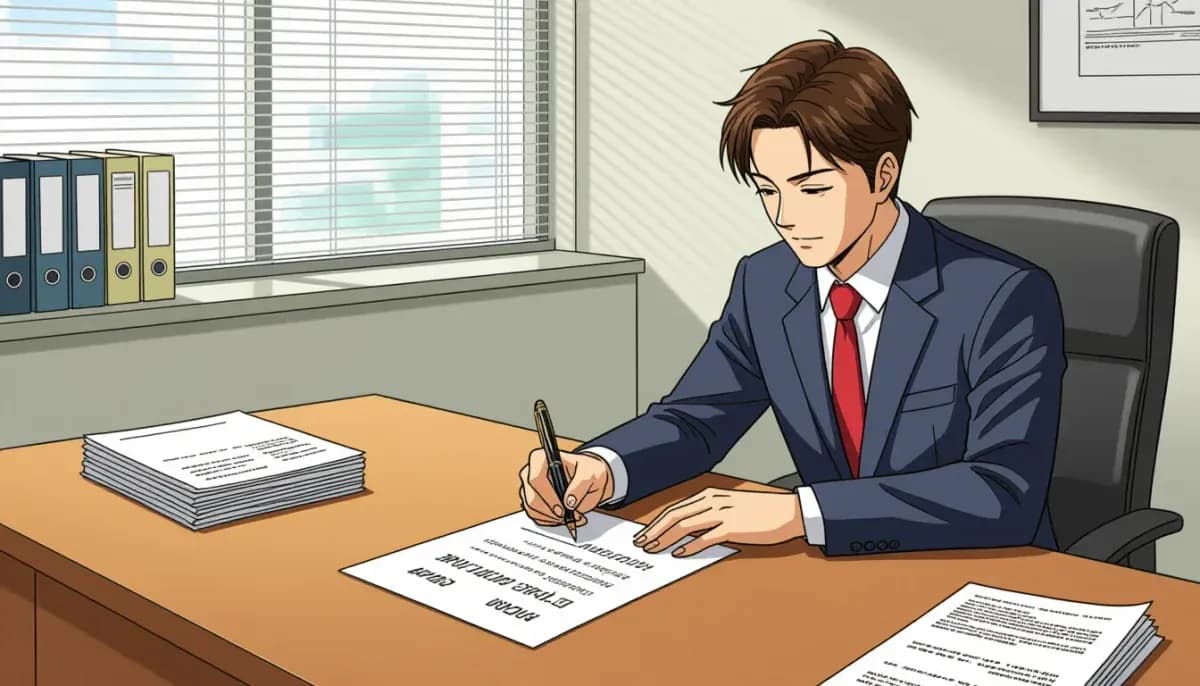
Understand Japanese employment contracts before you sign. Learn about contract types, working hours, overtime rules, visa alignment, termination rights, and red flags every foreigner should know.
Understanding Japanese Employment Contracts: A Complete Guide for Foreigners
Starting a new job in Japan is exciting, but before you sign on the dotted line, you need to understand what you are agreeing to. Japanese employment contracts come with their own terminology, legal protections, and potential pitfalls that differ significantly from what you may be used to in your home country. Whether you are a first-time job seeker or switching employers, understanding the details of your contract is one of the most important steps in your working life in Japan.
This guide walks you through every essential aspect of Japanese employment contracts, from the different contract types to the legal protections guaranteed to all foreign workers. For a broader overview of working in Japan, check out our Complete Guide to Working in Japan as a Foreigner.
Types of Employment Contracts in Japan
Japan has several distinct employment categories, each with different rights and benefits. Understanding which type you are being offered is the first step.
| Contract Type | Japanese Term | Duration | Benefits | Job Security |
|---|---|---|---|---|
| Regular Full-Time | Seishain (正社員) | Indefinite | Full benefits, bonuses | Very high |
| Contract Employee | Keiyaku Shain (契約社員) | Fixed (1-3 years) | Most benefits | Moderate |
| Dispatch Worker | Haken Shain (派遣社員) | Fixed, via agency | Varies | Lower |
| Part-Time | Arubaito / Paato (アルバイト・パート) | Flexible | Limited | Low |
| Subcontractor | Gyoumu Itaku (業務委託) | Project-based | None (self-employed) | None |
Seishain is the gold standard of Japanese employment. You receive full bonuses (often twice a year), comprehensive social insurance, and strong protections against dismissal. Most foreigners aiming for long-term careers in Japan target this type.
Keiyaku Shain contracts are fixed-term, typically ranging from one to three years. While you receive many of the same benefits as seishain, there is always the uncertainty of contract renewal. However, under Japan's Labor Contract Act, if your contract has been renewed repeatedly, the employer may be obligated to convert it to an indefinite contract after five years.
Haken Shain means you are employed by a staffing agency and dispatched to a client company. Your actual employer is the agency, not the company where you work day-to-day. This arrangement is common in IT and administrative roles. Learn more about IT and tech jobs in Japan and how dispatch contracts work in the tech industry.
What Must Be Included in Your Contract
Japanese labor law requires employers to clearly state certain conditions in writing. Under the Labor Standards Act, the following items must be specified in every employment contract:
- Contract period (fixed-term or indefinite)
- Place of work and job description
- Working hours, break times, rest days, and holidays
- Wage amount, calculation method, and payment schedule
- Rules regarding overtime and premium pay rates
- Conditions for resignation and termination
- Social insurance enrollment details
- Retirement allowance rules (if applicable)
If any of these items are missing from your contract, request them in writing before signing. Verbal promises are difficult to enforce under Japanese law. For foreigners who do not read Japanese fluently, you have the right to request a translation or explanation in a language you understand. The Tozen Union Foreign Workers Handbook is an excellent resource for understanding your legal protections.
Working Hours, Overtime, and the 36 Agreement
The standard legal working hours in Japan are 8 hours per day and 40 hours per week. Any work beyond these limits is considered overtime and must be compensated at premium rates.
| Overtime Type | Minimum Premium Rate |
|---|---|
| Regular overtime | 25% above base hourly rate |
| Late night work (10 PM - 5 AM) | 25% above base hourly rate |
| Work on rest days | 35% above base hourly rate |
| Overtime + late night | 50% above base hourly rate |
| Overtime exceeding 60 hours/month | 50% above base hourly rate |
For a company to legally require overtime, it must have a 36 Agreement (saburoku kyoutei, 三六協定), which is a written agreement between the employer and employee representatives filed with the local Labor Standards Inspection Office. Without this agreement, any overtime demand is technically illegal.
Watch Out for Fixed Overtime (Minashi Zangyou)
One of the most common sources of confusion for foreigners is fixed overtime (みなし残業 or 固定残業代). Some companies include a set number of overtime hours in your base salary. For example, your contract might state that your monthly salary includes compensation for 30 hours of overtime.
This practice is legal, but the contract must clearly state:
- How many overtime hours are included
- The monetary amount allocated to those hours
- That any overtime exceeding the fixed amount will be paid additionally
If your contract mentions fixed overtime but lacks these specifics, that is a red flag. For more on salary structures, see our guide on salary expectations in Japan.
Visa and Employment Contract Alignment
Your employment contract and visa status are closely linked. Foreigners' work activities in Japan are restricted based on their visa category, and performing work outside your permitted scope constitutes illegal employment, which can result in visa revocation and deportation.
Key points to verify:
- Your job duties described in the contract must fall within your visa category. For example, an Engineer/Specialist in Humanities/International Services visa does not permit manual labor jobs.
- The contract should include a visa contingency clause stating that employment is contingent upon obtaining and maintaining the appropriate work visa.
- Your employer should confirm their willingness to sponsor your visa and handle immigration paperwork.
- If you are on a student visa, you are limited to 28 hours of work per week during school semesters. Check our guide on part-time work rules for foreigners for details.
For comprehensive information on visa categories and requirements, refer to our Japan Visa and Immigration Guide. You can also find detailed job search strategies in the finding jobs in Japan guide on Living in Nihon.
Probation Periods and Trial Employment
Most Japanese companies include a probation period (試用期間, shiyou kikan), typically lasting three to six months. During this time, the company evaluates your performance and cultural fit.
Important things to know about probation:
- You are still a full employee during probation, with all legal protections intact.
- The company cannot easily fire you during probation. Dismissal still requires justifiable cause under Japanese law.
- Your salary and benefits may be slightly lower during probation, but this must be stated in the contract.
- Social insurance enrollment begins from day one, not after probation ends.
Some companies try to extend probation periods indefinitely or use them as an excuse for easy termination. This is not legal. If your employer threatens dismissal during probation without clear documentation of performance issues, seek advice from a labor union or the Labor Standards Inspection Office.
Termination and Resignation Rules
Understanding how employment ends in Japan protects you from unfair treatment.
Employer-Initiated Termination
Japanese law strongly protects employees against unfair dismissal. For indefinite contracts:
- The employer must provide 30 days advance notice or pay 30 days wages in lieu of notice.
- Termination must be based on just cause such as serious misconduct, persistent poor performance (with documented warnings), or genuine business necessity.
- Dismissal during maternity leave or work injury recovery (plus 30 days after) is prohibited.
- The employer cannot fire you simply because your contract is in Japanese and you did not understand certain terms.
For fixed-term contracts, early termination is only permitted with unavoidable reasons, which is an even higher standard than just cause.
Employee Resignation
If you want to leave your job:
- For indefinite contracts, you must give 14 days notice under civil law, though most companies request 30 days or more as a courtesy.
- For fixed-term contracts, you generally cannot resign before the contract ends unless you have been employed for over one year or have a compelling reason.
- Your employer cannot penalize you financially for resigning. Penalty clauses for early resignation are illegal under the Labor Standards Act.
- The employer cannot withhold your final paycheck or confiscate personal documents.
When considering a career change, review our guide on how to change careers in Japan and explore opportunities through recruitment agencies for foreigners. For information about contract and dispatch worker rights and protections, Ittenshoku provides detailed guidance.
Paid Leave and Social Benefits
All employees in Japan, including foreigners, are entitled to specific benefits by law.
Annual Paid Leave
After working six continuous months with an attendance rate of 80% or higher, you are entitled to 10 days of paid leave. This increases with tenure:
| Years of Service | Paid Leave Days |
|---|---|
| 0.5 years | 10 days |
| 1.5 years | 11 days |
| 2.5 years | 12 days |
| 3.5 years | 14 days |
| 4.5 years | 16 days |
| 5.5 years | 18 days |
| 6.5+ years | 20 days (maximum) |
Since 2019, employers are legally required to ensure that employees with 10+ days of leave take at least 5 days per year. Part-time employees receive proportional leave based on their working schedule.
Social Insurance
All regular employees must be enrolled in Japan's social insurance system, which includes:
- Health insurance (kenkou hoken)
- Pension (kousei nenkin)
- Employment insurance (koyou hoken)
- Workers accident compensation insurance (rousai hoken)
Your employer pays roughly half of health insurance and pension premiums, with the rest deducted from your salary. For details on Japan's healthcare system, see our healthcare guide for foreigners. To understand how these deductions affect your finances, check our banking and finance guide.
Red Flags to Watch For in Your Contract
Before signing any employment contract, watch for these warning signs:
- No written contract provided — Verbal agreements only are a major red flag
- Vague job descriptions — Your duties should be clearly defined, especially for visa purposes
- Missing overtime details — If the contract does not mention overtime pay or includes unreasonable fixed overtime
- Penalty clauses — Any fines for quitting, making mistakes, or taking sick days are illegal
- No social insurance — If the company says you are not eligible despite working full-time hours
- Forced savings schemes — Employers cannot require you to deposit money with them
- Document confiscation — No employer may hold your passport, residence card, or other personal documents
- Unreasonably long non-compete clauses — While some restrictions are legal, overly broad non-compete agreements may not be enforceable
If you encounter any of these issues, consult the employment contract breakdown guide on Daijob for additional advice, or contact the nearest Labor Standards Inspection Office (労働基準監督署). The Japan Dev guide on navigating labor contracts also offers practical tips for foreign professionals. You can also explore employment guidance at For Work in Japan.
Practical Steps Before Signing Your Contract
Follow these steps to protect yourself:
- Request the contract in advance — Never sign on the spot. Take it home and review carefully.
- Get a translation if needed — You are entitled to understand what you are signing.
- Verify all mandatory items are included (see the checklist in section two above).
- Check the overtime policy — Understand whether fixed overtime applies and how additional hours are compensated.
- Confirm visa sponsorship — Ensure the employer will handle work visa applications and renewals.
- Ask about the probation period — Know the duration, salary differences, and evaluation criteria.
- Research the company — Check reviews on sites like OpenWork (formerly Vorkers) or Glassdoor.
- Keep a signed copy — Both you and the employer should retain signed copies of the contract.
For those just starting their job search, our guides on how to find a job in Japan and best job search websites can help you identify reputable employers. If you are preparing for interviews, check out our Japan job interview tips and Japanese resume writing guide.
Conclusion
Understanding your Japanese employment contract is not just about knowing your salary — it is about protecting your rights, your visa status, and your future in Japan. Japanese labor law offers strong protections to all workers regardless of nationality, but these protections only help you if you know they exist. Take the time to read every clause, ask questions, and seek professional help when needed. A few hours of careful review before signing can prevent years of problems down the road.
For more comprehensive information about employment law in Japan, the ICLG Employment and Labour Laws guide provides detailed legal analysis. Your journey to a successful career in Japan starts with a contract you fully understand.

Originally from Vietnam, living in Japan for 16+ years. Graduated from Nagoya University, with 11 years of professional experience at Japanese and international companies. Sharing information about living in Japan for foreigners.
View Profile →Related Articles

Best Industries Hiring Foreigners in Japan
Discover the top industries hiring foreigners in Japan, from IT and manufacturing to healthcare and hospitality. Complete guide with salary data, statistics, and job search tips for 2025.
Read more →
Finding a Job in Japan Without Japanese Language Skills
Discover how to find a job in Japan without speaking Japanese. Complete guide covering IT, teaching, recruitment jobs, salary data, visa options, and job search strategies for foreigners.
Read more →
Best Recruitment Agencies in Japan for Foreigners
Discover the top recruitment agencies in Japan for foreigners including RGF, Robert Walters, JAC Recruitment and more. Free for job seekers with expert guidance on visa sponsorship, interview prep, and salary negotiation.
Read more →
How to Change Careers in Japan as a Foreigner
Complete guide to changing careers in Japan as a foreigner. Learn about visa requirements, best industries, job search strategies, cultural tips, and step-by-step career transition advice.
Read more →
Salary Expectations in Japan for Foreign Workers
Complete guide to salary expectations for foreign workers in Japan. Average salaries by industry, visa type, and region, plus negotiation tips and deduction breakdowns to maximize your earnings.
Read more →
Part Time Work Rules for Foreigners in Japan
Learn the essential rules for part-time work in Japan as a foreigner. Covers visa requirements, 28-hour work limits, prohibited jobs, worker rights, taxes, and tips for finding arubaito jobs.
Read more →