
How to Write a Japanese Resume Rirekisho Guide

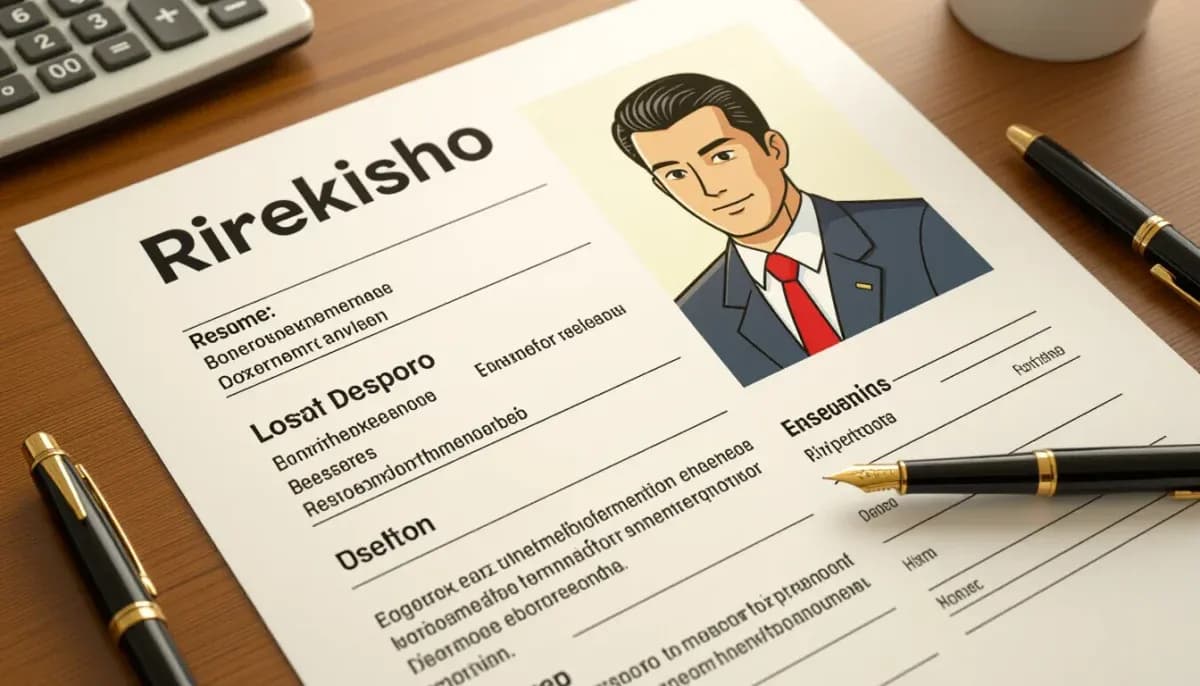
Complete guide to writing a Japanese resume (rirekisho) as a foreigner. Learn the required format, sections, photo rules, and tips to avoid common mistakes in your Japan job application.
How to Write a Japanese Resume (Rirekisho): The Complete Guide for Foreigners
If you are job hunting in Japan, you will quickly discover that the Japanese resume system is nothing like what you are used to back home. The rirekisho (履歴書) is a standardized document that every employer expects, and getting it wrong can cost you the interview before you even walk through the door. This guide walks you through every section of the rirekisho, explains what makes it unique, and gives you the practical tips you need to stand out as a foreign applicant.
Whether you are looking for your first job in Japan or switching careers, understanding the rirekisho is an essential first step.
What Is a Rirekisho and Why Does Japan Use It?
A rirekisho is a standardized resume format used exclusively in Japan. Unlike Western resumes where you have creative freedom with layout and design, the rirekisho follows a strict template known as the JIS (Japanese Industrial Standard) format. It is always a two-page A4 document with fixed sections that every applicant must complete identically.
The format dates back to Japan's postwar era when companies hired fresh graduates in bulk. Because most applicants had minimal work experience, a uniform document made it easy for HR departments to compare candidates quickly. Even today, the rirekisho remains the standard first impression document for nearly every job application in Japan.
It is important to understand that the rirekisho is different from the shokumukeirekisho (職務経歴書), which is a separate document where you detail your career achievements and responsibilities. Most employers require both documents, so do not confuse them. For a deeper overview of working in Japan as a foreigner, check our comprehensive guide.
The Key Sections of a Rirekisho Explained
Every rirekisho contains the same sections in the same order. Here is what you need to fill out and how to do it correctly.
Personal Information (基本情報)
At the top of the rirekisho, you enter your name, date of birth, gender, address, phone number, and email. There is a furigana (ふりがな) field above your name where you write the phonetic reading. As a foreigner, write your name reading in katakana in this field.
Your address should be your current Japanese address written in Japanese. If you are applying from overseas, write your full address with the country name clearly visible.
Photo (写真)
This is one of the biggest differences from Western resumes. A professional passport-sized photo (3cm x 4cm) is mandatory and must be glued to the upper-right corner. The photo should be taken within the last three months, show you in formal business attire, and have a plain white or light blue background.
You can get professional resume photos at photo booths (証明写真機) found in most train stations and convenience store areas across Japan. These typically cost between 500 and 800 yen for a set of photos. For a more polished result, visit a professional photography studio, which usually costs 1,500 to 3,000 yen.
Education History (学歴)
List your educational background in chronological order starting from high school graduation. For each entry, include the date of enrollment and graduation, the official name of the institution, and your department or major. If the school was outside Japan, include the country name.
Use either the Western calendar (2015, 2019) or Japanese calendar (平成27年, 令和元年) for dates, but be consistent throughout the entire document. Never mix both systems.
Work Experience (職歴)
List your employment history chronologically. For each company, write two lines: one for when you joined (入社) and one for when you left (退職). Include the full official company name each time.
Here is the critical rule that trips up most foreigners: do not list your job responsibilities or achievements in the rirekisho. Those details belong in the shokumukeirekisho. The rirekisho only records where you worked and when.
Qualifications and Licenses (免許・資格)
List relevant licenses and certifications with the date you received them. For foreigners, this is a great place to list your JLPT certification level, driver's license, or any professional certifications. If you have no qualifications to list, write 特になし (nothing in particular).
Motivation and Self-PR (志望の動機・自己PR)
This section is your chance to explain why you want to work at this specific company and what you bring to the role. It should be customized for every single application. Generic motivation statements are easy to spot and will hurt your chances. Mention specific aspects of the company that appeal to you and connect them to your skills and experience.
Additional Details (本人希望記入欄)
This section covers practical matters like desired salary, preferred work location, and commute time. Unless you have specific requirements, the standard practice is to write 貴社の規定に従います (I will follow your company's regulations).
Rirekisho Section-by-Section Requirements
| Section | What to Include | Common Foreigner Mistakes |
|---|---|---|
| Name & Furigana | Full name with katakana reading above | Writing furigana in romaji instead of katakana |
| Photo | 3x4cm formal photo, taken within 3 months | Using a casual selfie or omitting the photo entirely |
| Date of Birth | Full date with age | Mixing Western and Japanese calendar formats |
| Address | Current Japanese address in Japanese | Writing address only in English |
| Education | From high school onward, chronological | Including elementary and middle school |
| Work History | Company names and dates only | Listing job duties (those go in shokumukeirekisho) |
| Qualifications | JLPT, licenses, certifications | Leaving blank instead of writing 特になし |
| Motivation | Tailored to each company | Using the same generic paragraph for every application |
| Preferences | Salary, location, commute | Making excessive demands |
Handwritten vs Typed: Which Should You Choose?
Traditionally, rirekisho were always handwritten in black ink. Neat handwriting was seen as a sign of dedication, attention to detail, and respect for the process. Some traditional companies and smaller businesses still prefer handwritten submissions.
However, typed rirekisho have become widely accepted, especially for foreign applicants, IT industry positions, and mid-career professionals. If the job posting does not specify a preference, a typed rirekisho is perfectly acceptable and often preferred because it is easier to read.
If you do write by hand, use a black ballpoint pen and write carefully. White-out or correction tape is strictly prohibited. If you make a mistake, you must start over on a fresh form. This is why many people recommend typing unless specifically asked for a handwritten version.
The standard fonts for typed rirekisho are Gothic (ゴシック) or Mincho (明朝). Use only one font throughout the entire document.
Where to Get Rirekisho Templates
You have several options for obtaining the standard rirekisho template:
Physical Forms: Available at most 100-yen shops (Daiso, Seria, Can Do), convenience stores (7-Eleven, FamilyMart, Lawson), and bookstores. These typically come in a set with envelopes and are ready to fill out by hand.
Digital Templates: The Ministry of Health, Labour and Welfare provides an official template that you can download and type directly. Sites like Japan Dev and Coto Academy also offer free downloadable templates specifically designed for foreign applicants.
Online Builders: Several websites let you fill in your information online and export a completed PDF. This is a convenient option if you are not comfortable with Japanese word processors.
For more guidance on resume preparation, check out the resume and CV writing guide at For Work in Japan and the IT resume guide at Ittenshoku.
Essential Tips for Foreigners Writing a Rirekisho
Have a native speaker review it. No matter how confident you are in your Japanese, ask a native speaker to check your rirekisho before submitting. Small grammatical errors or awkward phrasing can make a poor impression.
Use the correct date format consistently. Pick either Western dates or Japanese era dates and stick with one system throughout. The current era is Reiwa (令和), which started in 2019.
Tailor your motivation section. This is the most important section for standing out. Research the company thoroughly and explain specifically why you want to work there. Mentioning that you read about their recent projects or company values shows genuine interest.
Prepare your shokumukeirekisho too. Most employers require both documents. The shokumukeirekisho is where you can detail your accomplishments, describe projects, and highlight skills that the rirekisho has no space for. This document has no fixed format, so you have more creative freedom.
Keep your photo professional. An inappropriate photo is one of the fastest ways to get rejected. Dress in a suit or business attire, look directly at the camera with a neutral or slight smile, and make sure the lighting is even.
Mind the details. Use the correct company suffixes (株式会社 before or after the company name as officially registered). Write school names in their official full form. Double-check all dates against your actual records.
If you are preparing for the next step after submitting your resume, our guide on Japan job interview tips and etiquette covers everything you need to know. You can also explore job search websites in Japan for foreigners to find positions that match your skills.
Rirekisho vs Western Resume: Key Differences
| Feature | Japanese Rirekisho | Western Resume/CV |
|---|---|---|
| Format | Strict standardized JIS template | Flexible, creative layouts allowed |
| Length | Always 2 pages | 1-2 pages, varies by country |
| Photo | Mandatory | Usually not included |
| Handwriting | Still accepted/preferred by some | Always typed |
| Personal Info | Includes age, gender, marital status | Often excluded for privacy |
| Job Descriptions | Not included (goes in shokumukeirekisho) | Core content of the resume |
| Date Format | Japanese era or Western (one only) | Standard Western dates |
| Motivation | Included in the document | Separate cover letter |
| Font Choice | Gothic or Mincho only | Wide variety acceptable |
Common Mistakes That Get Your Rirekisho Rejected
Even small errors can result in immediate rejection. Here are the most common pitfalls:
- Submitting without a photo - This is a non-negotiable requirement for most Japanese employers.
- Mixing date formats - Switching between Western and Japanese calendars within the document looks careless.
- Using white-out on handwritten forms - If you make a mistake, start fresh. Corrections suggest a lack of care.
- Writing job descriptions in the work history section - Save those for the shokumukeirekisho.
- Copying the same motivation statement for every application - Recruiters can tell when it is generic.
- Leaving sections blank - If a section does not apply, write 特になし rather than leaving it empty.
- Not using proper keigo (polite language) - The rirekisho should be written in formal Japanese throughout. Our keigo guide can help.
- Forgetting to sign and date - The rirekisho should be dated the day you submit it or mail it.
Understanding business Japanese for the workplace will also help you write more naturally in formal contexts. For a broader look at finding employment opportunities, visit the complete job-hunting guide at Living in Nihon.
Frequently Asked Questions About Rirekisho
Can I submit an English resume instead? Only if the company specifically asks for one. Foreign companies and international startups in Japan sometimes accept English CVs, but when in doubt, prepare a rirekisho. It shows respect for Japanese business customs.
Do I need to write it in Japanese if my Japanese is limited? For most Japanese companies, yes. If you are applying to a company where English is the primary language, ask their HR department what they prefer. If you are still learning Japanese, focus on getting the rirekisho right with the help of a native speaker or translation service.
Where can I get my resume photo taken? Photo booths (証明写真機) are available at most train stations, shopping malls, and near convenience stores throughout Japan. Look for machines labeled 証明写真 or ID写真. Professional photography studios in department stores or shopping areas offer higher quality results.
How often should I update my rirekisho? Update it every time your circumstances change, such as completing a new qualification, changing addresses, or gaining new work experience. Always re-date the document before each submission.
Is it okay to email a rirekisho? Many companies now accept digital submissions via email or their online application portal. Save your rirekisho as a PDF when sending electronically. Some companies still require physical copies sent by mail or brought to interviews, so check the job posting carefully.
For more about understanding Japanese employment contracts and what to expect after your resume gets noticed, explore our detailed guide.

Originally from Vietnam, living in Japan for 16+ years. Graduated from Nagoya University, with 11 years of professional experience at Japanese and international companies. Sharing information about living in Japan for foreigners.
View Profile →Related Articles

Best Industries Hiring Foreigners in Japan
Discover the top industries hiring foreigners in Japan, from IT and manufacturing to healthcare and hospitality. Complete guide with salary data, statistics, and job search tips for 2025.
Read more →
Finding a Job in Japan Without Japanese Language Skills
Discover how to find a job in Japan without speaking Japanese. Complete guide covering IT, teaching, recruitment jobs, salary data, visa options, and job search strategies for foreigners.
Read more →
Understanding Japanese Employment Contracts
Understand Japanese employment contracts before you sign. Learn about contract types, working hours, overtime rules, visa alignment, termination rights, and red flags every foreigner should know.
Read more →
Best Recruitment Agencies in Japan for Foreigners
Discover the top recruitment agencies in Japan for foreigners including RGF, Robert Walters, JAC Recruitment and more. Free for job seekers with expert guidance on visa sponsorship, interview prep, and salary negotiation.
Read more →
How to Change Careers in Japan as a Foreigner
Complete guide to changing careers in Japan as a foreigner. Learn about visa requirements, best industries, job search strategies, cultural tips, and step-by-step career transition advice.
Read more →
Salary Expectations in Japan for Foreign Workers
Complete guide to salary expectations for foreign workers in Japan. Average salaries by industry, visa type, and region, plus negotiation tips and deduction breakdowns to maximize your earnings.
Read more →