
How to Get a Certificate of Eligibility for Japan

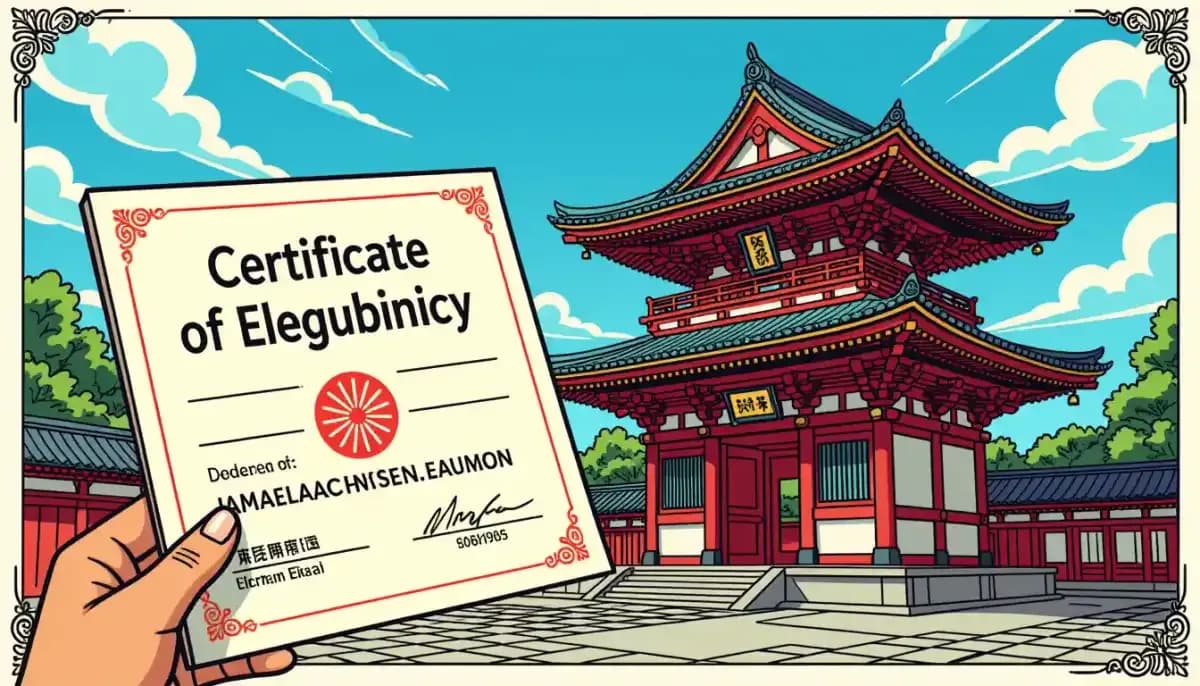
Complete guide to Japan's Certificate of Eligibility (COE): who needs it, how to apply, required documents, processing time, costs, and tips to avoid common mistakes.
How to Get a Certificate of Eligibility for Japan: The Complete COE Guide
If you're planning to move to Japan for work, study, or family reasons, you'll likely need a Certificate of Eligibility (COE) before you can apply for a long-term visa. This document is the first and most critical step in Japan's immigration process for foreigners seeking to stay more than 90 days. Understanding how the COE works, who applies, what documents are needed, and how long it takes will save you months of confusion and delays.
This guide covers everything you need to know about the Certificate of Eligibility — from what it is and who needs it, to step-by-step application instructions and common pitfalls to avoid.
What Is the Certificate of Eligibility (COE)?
The Certificate of Eligibility (在留資格認定証明書, zairyū shikaku nintei shōmeisho) is an official document issued by Japan's Immigration Services Agency (ISA) under the Ministry of Justice. It serves as a pre-screening approval, confirming that the foreign national's planned activities and residence status in Japan meet Japanese immigration law requirements.
Think of it as immigration's "green light" before you even leave your home country. Once a COE is issued, you bring it to the nearest Japanese embassy or consulate to apply for your actual visa sticker.
Key facts about the COE:
- Issued by: Immigration Services Agency of Japan (Ministry of Justice)
- Cost: ¥0 — completely free from the government
- Validity: 3 months (90 days) from the date of issuance
- Purpose: Pre-approves your residence status before your visa application
- Approval rate: Approximately 99.9% when correctly submitted (2024 data)
Note: A COE does not guarantee visa issuance. The Ministry of Foreign Affairs (which issues visas) operates independently from the Ministry of Justice (which issues COEs). You still need to apply for the visa separately at a Japanese overseas mission.
For a broader overview of Japan's visa system, see our Complete Guide to Japan Visa and Immigration.
Who Needs a Certificate of Eligibility?
Not everyone moving to Japan needs a COE. Here's a quick breakdown:
| Situation | COE Required? |
|---|---|
| Working in Japan (most visa categories) | ✅ Yes |
| Studying at Japanese university/school | ✅ Yes |
| Joining family member in Japan (Dependent visa) | ✅ Yes |
| Spouse of Japanese national | ✅ Yes |
| Short-term stay under 90 days (tourism, business meetings) | ❌ No |
| Visa-exempt short stay | ❌ No |
| Renewing an existing residence status inside Japan | ❌ No |
If you already have a residence status in Japan and are simply renewing or changing your status, you do NOT apply for a COE. The COE is specifically for foreign nationals applying to enter Japan for the first time with a long-term residence status.
Step-by-Step: How to Apply for a COE
One of the most important things to understand about the COE process is that you cannot apply for yourself from overseas. The application must be submitted in Japan by a designated proxy (代理人, dairi-nin).
Step 1: Find Your Proxy (Sponsor) in Japan
Your proxy can be one of the following:
- Employer or hiring company (most common for work visas)
- University or language school (for student visas)
- Spouse or family member residing in Japan (for family visas)
- Licensed immigration lawyer (gyōsei shoshi or bengoshi)
The proxy must register an account with the Immigration Services Agency online system if submitting electronically (available since March 2023).
Step 2: Gather Required Documents
The required documents vary depending on your visa category:
For Work Visas (Engineer, Specialist, etc.):
- Completed COE application form (Form 6-3)
- Your passport copy
- Passport-sized photo (4cm × 3cm, no background)
- Certificate of employment or letter of offer from Japanese employer
- Employment contract
- Company's certificate of incorporation (登記事項証明書)
- Most recent financial statements of the hiring company
- Applicant's resume/CV with educational and work history
- Degree certificates or relevant qualification documents
For Student Visas:
- Admission letter from school/university
- Proof of financial support (bank statements, scholarship documents)
- Academic transcripts
For Spouse/Family Visas:
- Marriage certificate (with certified Japanese translation)
- Family register copy (戸籍謄本) of Japanese spouse
- Evidence of cohabitation plans
- Proof of financial support (income certificate)
For Dependent Visas:
- Primary resident's residence card copy
- Proof of relationship (birth certificate, marriage certificate)
- Income evidence of primary resident
Step 3: Submit the Application
Applications are submitted to the Regional Immigration Services Bureau (地方出入国在留管理局) that has jurisdiction over the applicant's planned place of residence or the hiring organization's location.
Since March 17, 2023, electronic submission is available. Sponsors can apply online through the ISA's online application system, and in some cases the COE can be delivered digitally by email. However, as of this writing, many embassies still prefer or require the original paper COE, so confirm with your local Japanese embassy.
Step 4: Wait for Processing
| Stage | Estimated Time |
|---|---|
| Document preparation | ~2 weeks |
| Immigration Services Agency review | 1–3 months |
| COE sent to applicant overseas | ~1 week |
| Visa application at Japanese embassy | ~1 week |
| Total (start to Japan entry) | ~4–5 months |
Processing times can vary significantly based on workload, visa category, and whether additional documents are requested (追加書類, tsuika shorui). Complex cases or applications for highly scrutinized visa categories can take longer.
Step 5: Receive the COE and Apply for Your Visa
Once the COE is issued, your proxy in Japan will receive it. They then send the original document to you overseas (physical mail). With the COE in hand, you can go to the nearest Japanese embassy or consulate and apply for the corresponding visa sticker.
Required at the embassy:
- Original COE
- Valid passport
- Visa application form
- Passport-sized photo
- Any additional documents required by that specific embassy
Common Reasons COE Applications Are Rejected or Delayed
Understanding the pitfalls can save you months of waiting:
- Incomplete or incorrect application forms — Japan's immigration forms are detailed. Any missing or inconsistent information can cause delays or rejection.
- Insufficient financial documentation — For work visas, immigration wants to see that the hiring company is financially stable. Small businesses may face additional scrutiny, especially since 2025 when stricter review processes for SMEs were introduced.
- Mismatch between visa category and actual job duties — The work you'll actually be doing must match the residence status you're applying for. For example, an "Engineer/Specialist in Humanities" visa requires specific educational qualifications.
- Submitting documents without certified translations — All foreign-language documents must be accompanied by Japanese translations. These do not need to be notarized in most cases, but they must be accurate.
- Waiting too long after COE issuance — The COE is only valid for 90 days. If you don't obtain your visa and enter Japan within that window, you'll need to start over.
- Identical reapplication after denial — If your application is denied, submitting the exact same documents again will not change the outcome. You need to address the specific reason for denial.
For more on working in Japan and what employers expect, check our Complete Guide to Working in Japan as a Foreigner.
COE for Different Visa Categories
The COE process applies across many visa types, but the specific requirements differ:
| Visa Category | Common Applicants | Key Requirement |
|---|---|---|
| Engineer/Specialist in Humanities/Int'l Services | IT engineers, translators, marketers | Relevant degree or 10+ years experience |
| Specified Skilled Worker (特定技能) | Manufacturing, construction, nursing | Pass sector exam + Japanese proficiency test |
| Student | University/language school students | Admission letter + proof of funds |
| Spouse of Japanese National | Married to Japanese citizen | Marriage certificate + cohabitation evidence |
| Dependent | Family of resident in Japan | Relationship proof + sponsor's income |
| Cultural Activities | Artists, researchers (unpaid) | Sponsoring organization letter |
If you're moving to Japan with your family, our Complete Guide to Moving to Japan as a Foreigner covers what to expect during the entire relocation process.
Digital COE: Japan's New Electronic System
In March 2023, Japan introduced a digital COE system. Under this system:
- Sponsors can submit COE applications online
- The COE can be issued and delivered electronically (PDF format)
- The electronic COE can be presented on a smartphone at the airport for entry
However, the adoption of digital COEs by overseas embassies and consulates varies. Some Japanese embassies still require the original paper COE for visa applications. Always check with the Japanese embassy in your home country before relying on an electronic COE.
How Much Does a COE Cost?
The official government fee for a COE is ¥0 (zero yen). There are no fees payable to immigration for this step.
That said, you may incur costs for:
- Immigration lawyer fees: ¥50,000–¥150,000+ depending on complexity and service provider
- Document translation services: ¥3,000–¥10,000 per document
- Certified copies of official documents: Varies by document type
- Courier/postal fees: For sending the COE internationally
Many companies cover these costs as part of the hiring and relocation process. If you're a student, your school's international office may handle the application for free.
Useful Resources and External Links
Navigating Japan's immigration system can be complex. These external resources offer detailed, up-to-date guidance:
- Japan Visa & Residency Status Guide – Living in Nihon — Comprehensive guide to residence statuses and visa types for foreigners
- Japan Visa & Residence Status Guide – For Work in Japan — Practical guidance for those seeking work-related visas
- Certificate of Eligibility Guide 2026 – Visa Japan — Detailed COE process and document requirements from immigration specialists
- Japan Certificate of Eligibility – VisaGuide.World — Overview and country-specific embassy information
- Complete COE Guide – Japan Trails Media — In-depth guide with recent updates and tips
Frequently Asked Questions
Can I apply for a COE myself from my home country? No. The application must be submitted in Japan by a proxy — an employer, school, family member, or licensed immigration lawyer.
What happens if my COE expires before I use it? If the 90-day validity period expires, you cannot use that COE. Your proxy will need to submit a new application. There is no extension option.
Can I get a COE for multiple people at once? Yes, companies and schools frequently submit batch COE applications for multiple foreign nationals simultaneously.
Do I need a COE if I'm already in Japan on a different visa? No. If you're already in Japan and need to change your residence status, you apply for a "Change of Status of Residence" (在留資格変更許可申請), not a COE.
Is the COE the same as a visa? No. The COE and the visa are separate documents. The COE is issued by Japan's Ministry of Justice and confirms your eligibility. The visa sticker is issued by the Ministry of Foreign Affairs through Japanese embassies and allows you to enter Japan.
What if my COE application is denied? You can reapply, but you must address the reason for denial. Consider consulting a licensed immigration lawyer to review your case before reapplying.
Final Thoughts: Plan Early and Work with Your Sponsor
The Certificate of Eligibility is the gateway to living and working legally in Japan. While the process can seem daunting — especially when you're managing it from overseas — it's very manageable when you start early and work closely with your Japanese sponsor.
The most important advice: start the COE process at least 5–6 months before your intended arrival date. This gives you buffer time for document collection, immigration review, and the visa application itself.
Once you've secured your visa and arrived in Japan, the real adventure begins. For everything you need to know about settling in, see our Complete Guide to Daily Life in Japan for Foreigners and The Complete Guide to Finding Housing in Japan.
For IT professionals and tech workers specifically, Ittenshoku offers dedicated career resources for IT workers making the move to Japan.

Originally from Vietnam, living in Japan for 16+ years. Graduated from Nagoya University, with 11 years of professional experience at Japanese and international companies. Sharing information about living in Japan for foreigners.
View Profile →Related Articles

Power of Attorney and Legal Representation in Japan
Learn how to create, notarize, and use a Power of Attorney in Japan as a foreigner. Covers legal representation, apostille process, costs, and how to find the right attorney.
Read more →
Japan Re-Entry Permit Do You Still Need One
Everything foreigners in Japan need to know about re-entry permits in 2025. Learn the difference between Special Re-Entry Permission and regular permits, how to apply, fees, and what happens if you forget.
Read more →
Essential Japanese Paperwork Vocabulary for Foreigners
Master the Japanese vocabulary you need to fill out official forms and administrative documents in Japan. Covers personal info, visa terms, tax forms, banking, and municipal registration with kanji, readings, and meanings.
Read more →
Name Change Procedures in Japan for Foreigners
A complete guide to name change procedures in Japan for foreigners. Learn how to update your residence card, register a Japanese alias (tsushomei), and navigate name changes after marriage or divorce.
Read more →
Japan Postal Savings and Official Mail Procedures
Complete guide to Japan Post services for foreigners: send domestic and international mail, open a Yucho Bank savings account, handle official mail, and manage address changes in Japan.
Read more →
Birth Registration in Japan for Foreign Parents
Step-by-step guide to birth registration in Japan for foreign parents. Learn about Shussho Todoke deadlines, visa for newborns, child allowance, koseki rules, and embassy registration.
Read more →