
Japan National Pension Enrollment Guide for Foreigners

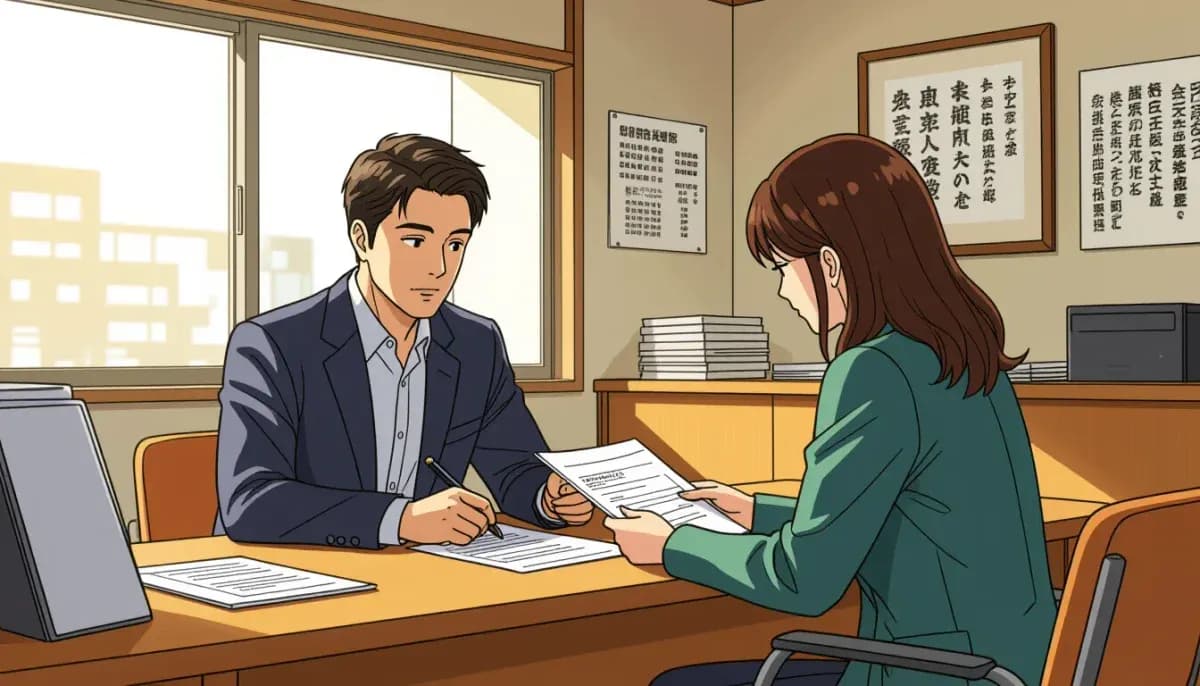
Complete guide to Japan's National Pension for foreigners: how to enroll, monthly premiums, exemptions, lump-sum withdrawal when leaving Japan, and social security agreements explained.
Japan National Pension Enrollment Guide for Foreigners
If you live in Japan, you are required to enroll in Japan's National Pension system — no matter your nationality. Whether you're a student, freelancer, company employee, or working holiday visa holder, Japan's pension law applies to you. This guide walks you through exactly how to enroll, what you'll pay, what you'll receive, and how to claim your money back if you leave Japan.
What Is Japan's National Pension (Kokumin Nenkin)?
Japan's National Pension system (国民年金, Kokumin Nenkin) is the foundation of the country's public retirement system. It is managed by the Japan Pension Service (日本年金機構) and provides old-age, disability, and survivor benefits to all enrolled residents.
Every person living in Japan between the ages of 20 and 59 must enroll, regardless of nationality or visa type. This includes:
- Students on student visas
- Self-employed workers and freelancers
- Part-time workers not covered by company pension
- Working holiday visa holders
- Long-term residents and permanent residents
The system has three categories of insured persons:
| Category | Who Qualifies | Premium |
|---|---|---|
| Category 1 (第1号被保険者) | Self-employed, students, unemployed, freelancers | ¥17,510/month (FY2025) |
| Category 2 (第2号被保険者) | Full-time employees covered by Employees' Pension | Deducted from salary automatically |
| Category 3 (第3号被保険者) | Dependent spouses of Category 2 members (income under ¥1.3M) | No premium required |
For most foreigners newly arriving in Japan — especially those not immediately employed — you will fall under Category 1 and must enroll yourself at your local municipal office.
For more detail on how Japan's pension system fits into the broader social security framework, see the Japan Pension and Social Security Guide on Living in Nihon.
How to Enroll in Japan's National Pension
Enrolling in the National Pension is straightforward and can be done in person, by mail, or online.
Step 1: Register Your Address
Before anything else, you must register your address at your local city or ward office (市区町村役所). This is done when you first arrive and move into your residence. Once registered, you receive a residence card (在留カード).
Step 2: Visit the National Pension Counter
Bring the following documents to your city/ward office's pension counter (年金窓口):
- Residence Card (在留カード)
- My Number Card (マイナンバーカード) or My Number notification letter
- Bankbook (if setting up automatic payment)
Staff will fill out the enrollment form with you. In most major cities, English-speaking staff or interpretation services are available.
Step 3: Receive Your Pension Handbook
After enrollment, you will receive a Blue Pension Handbook (年金手帳) or a Pension Number notification card. Keep this document — you'll need your pension number for future transactions.
Step 4: Pay Your Premium
Your first payment slip (納付書) will be sent by mail. You can pay:
- At convenience stores (7-Eleven, FamilyMart, Lawson)
- At post offices or banks
- Via automatic bank transfer (口座振替) — recommended, as it qualifies for a small discount
- Online via credit card or internet banking
Online Enrollment via MyNaPortal
Since 2022, you can also enroll online through the MyNaPortal app if you have a My Number Card with a smartphone reader. This is the most convenient option for tech-savvy residents.
For a comprehensive overview of the tax and social insurance landscape as a foreign worker, the Tax, Social Insurance, and Pension Guide on For Work in Japan is a useful companion resource.
National Pension Premium Amounts and Payment Options
The FY2025 monthly premium is ¥17,510 (valid from April 2025 through March 2026). This amount is adjusted annually.
Discount Options
You can reduce your premium by paying in advance:
| Payment Period | Discount (Approximate) |
|---|---|
| Monthly payment | No discount |
| 6-month advance | ~¥330 off total |
| 12-month advance | ~¥820 off total |
| 24-month advance | ~¥1,590 off total |
| Auto-debit (monthly) | ¥50/month reduction |
| Auto-debit (annual advance) | Highest combined discount |
Paying by automatic bank transfer each month also provides a small discount and removes the hassle of remembering to pay.
Premium Exemptions and Reductions
If you cannot afford the monthly premium, you can apply for a full or partial exemption. This is important: do not simply stop paying without applying for an exemption, as unpaid periods hurt your future benefit entitlement.
Exemption Types
| Exemption Level | Covered Portion | Benefit Credit |
|---|---|---|
| Full Exemption (全額免除) | 100% | 1/2 of standard credit |
| 3/4 Reduction | 75% | 5/8 of standard credit |
| Half Reduction | 50% | 3/4 of standard credit |
| 1/4 Reduction | 25% | 7/8 of standard credit |
| Student Payment Deferral | 100% (students only) | No credit until paid |
To apply, bring proof of income (or lack thereof) and your residence card to your municipal office. You can also apply via MyNaPortal. Applications can be made retroactively for up to 25 months.
If your situation improves later, you can make up missed payments within 10 years — called "back-payment" (追納) — to restore your full benefit calculation.
National Pension Benefits: What You'll Receive
The National Pension provides three types of benefits:
Old-Age Basic Pension (老齢基礎年金)
This is the standard retirement benefit. To receive any pension, you need a minimum of 10 years of coverage (combined enrollment and exemption periods).
With a full 40-year contribution record, the annual pension amount is approximately ¥831,700 (FY2025 rate, approximately ¥69,300/month).
You can choose when to start receiving your pension:
| Start Age | Annual Adjustment | Annual Amount (40 years) |
|---|---|---|
| Age 60 (early) | −24% | ~¥632,000 |
| Age 65 (standard) | 0% | ¥831,700 |
| Age 70 (deferred) | +42% | ~¥1,181,000 |
| Age 75 (maximum deferral) | +84% | ~¥1,530,000 |
Disability Basic Pension (障害基礎年金)
If you become disabled and meet coverage requirements, you can receive disability payments regardless of age.
Survivor Basic Pension (遺族基礎年金)
Paid to surviving spouses or children when a covered person dies. Coverage requirements must be met.
Lump-Sum Withdrawal for Foreigners Leaving Japan
One of the most important — and often overlooked — benefits for foreigners is the Lump-Sum Withdrawal Payment (脱退一時金, Dattai Ichijkin). If you leave Japan without qualifying for a full pension (less than 10 years total), you can claim a refund of part of your contributions.
Eligibility
- Not a Japanese national
- Have at least 6 months of National Pension or Employees' Pension coverage
- Have lost your Japanese address (left Japan)
- Have not received a Japanese pension
- Must apply within 2 years of departure
How Much Will You Receive?
| Coverage Period | Lump-Sum Amount |
|---|---|
| 6–11 months | ¥52,530 |
| 12–17 months | ¥105,060 |
| 18–23 months | ¥157,590 |
| 24–29 months | ¥210,120 |
| 36–41 months | ¥315,180 |
| 48–59 months | ¥420,240 |
| 60+ months | ¥525,300 |
Important: A 20.42% withholding tax is deducted at the time of payment. However, if your home country has a tax treaty with Japan, you may be able to claim a refund of the withholding tax through a tax agent in Japan.
How to Apply
- Leave Japan and deregister your address (or lose your Japanese residency)
- Submit the lump-sum withdrawal application to the Japan Pension Service:
- By mail from abroad: Send to Japan Pension Service headquarters - Online: Via the Japan Pension Service website (limited functionality from abroad)
- Designate a Japanese bank account or foreign account for payment
You can find the official application form and guidance on the Japan Pension Service international page.
For additional context on managing finances as a foreigner leaving or working in Japan, Ittenshoku's resources for foreign workers cover employment and tax topics that often intersect with pension planning.
Social Security Agreements: Avoiding Double Coverage
Japan has Social Security Agreements with 24 countries. These agreements:
- Prevent double coverage — you won't have to pay pension in both Japan and your home country simultaneously
- Allow totalization — you can combine contribution periods from both countries to meet minimum eligibility requirements
Countries with agreements include the United States, United Kingdom, Germany, France, Canada, Australia, South Korea, China, Netherlands, and others.
If your country has an agreement, check with your home country's pension authority to understand how to properly coordinate contributions. Your employer's HR department or the Japan Pension Service international helpline can also advise.
For a detailed breakdown of how working in Japan affects your financial planning, the GaijinPot Japan Pension Guide for Foreigners offers practical step-by-step guidance.
Common Mistakes Foreigners Make with Japan's Pension
Understanding the pitfalls can save you money and hassle:
1. Not enrolling at all Many foreigners assume they don't need to join if they're only staying short-term. This is incorrect. Non-enrollment results in unpaid periods that cannot easily be recovered, and can also trigger collection notices or penalties.
2. Stopping payments without applying for exemption If you can't afford the premium, apply for an exemption immediately. Simply not paying creates a gap in your record that reduces your future benefit — or disqualifies your lump-sum withdrawal calculation.
3. Missing the 2-year lump-sum withdrawal deadline This is one of the most costly mistakes. Once 2 years pass after you leave Japan, your right to claim the lump-sum withdrawal expires permanently.
4. Losing your pension number Your pension number links all your records. Keep your pension handbook or notification card in a safe place. If you lose it, you can recover your number through the Japan Pension Service with your My Number.
5. Not checking social security agreements If your home country has an agreement with Japan, you may be able to count your time in Japan toward your home country's pension — or vice versa. This is especially valuable for workers on multi-year assignments.
Frequently Asked Questions
Do I have to enroll even if I'm only in Japan for 1-2 years? Yes. Even residents staying for less than two years are legally required to enroll. The silver lining: you can claim the lump-sum withdrawal when you leave.
What if my employer says they'll handle it? If you are a full-time employee covered by Employees' Pension (厚生年金), your employer handles enrollment and deducts contributions from your salary. You do not need to visit city hall for National Pension separately in this case.
Can I receive both Japan's pension and my home country's pension? Yes, in most cases. Japan's pension and your home country's pension are separate benefits — you can qualify for both if you meet each country's requirements.
What happens if I return to Japan later? If you claimed a lump-sum withdrawal, those months are erased from your record. Returning and working in Japan again starts a new contribution clock. If you did not claim the withdrawal, your previous contribution period remains valid and counts toward future eligibility.
How do I contact the Japan Pension Service in English? The Japan Pension Service operates an English-language helpline: 0570-003-004 (Navi Dial), available weekdays 8:30–17:15. International callers: +81-3-6700-1165.
Understanding and managing your National Pension obligations is an important part of settling into life in Japan. For broader guidance on navigating finances, taxes, and daily logistics as a foreigner, explore our guides on banking and finance in Japan, taxes in Japan for foreigners, and healthcare in Japan.

Originally from Vietnam, living in Japan for 16+ years. Graduated from Nagoya University, with 11 years of professional experience at Japanese and international companies. Sharing information about living in Japan for foreigners.
View Profile →Related Articles

Power of Attorney and Legal Representation in Japan
Learn how to create, notarize, and use a Power of Attorney in Japan as a foreigner. Covers legal representation, apostille process, costs, and how to find the right attorney.
Read more →
Japan Re-Entry Permit Do You Still Need One
Everything foreigners in Japan need to know about re-entry permits in 2025. Learn the difference between Special Re-Entry Permission and regular permits, how to apply, fees, and what happens if you forget.
Read more →
How to Get a Certificate of Eligibility for Japan
Complete guide to Japan's Certificate of Eligibility (COE): who needs it, how to apply, required documents, processing time, costs, and tips to avoid common mistakes.
Read more →
Essential Japanese Paperwork Vocabulary for Foreigners
Master the Japanese vocabulary you need to fill out official forms and administrative documents in Japan. Covers personal info, visa terms, tax forms, banking, and municipal registration with kanji, readings, and meanings.
Read more →
Name Change Procedures in Japan for Foreigners
A complete guide to name change procedures in Japan for foreigners. Learn how to update your residence card, register a Japanese alias (tsushomei), and navigate name changes after marriage or divorce.
Read more →
Japan Postal Savings and Official Mail Procedures
Complete guide to Japan Post services for foreigners: send domestic and international mail, open a Yucho Bank savings account, handle official mail, and manage address changes in Japan.
Read more →