
Paperwork for Moving Between Cities in Japan

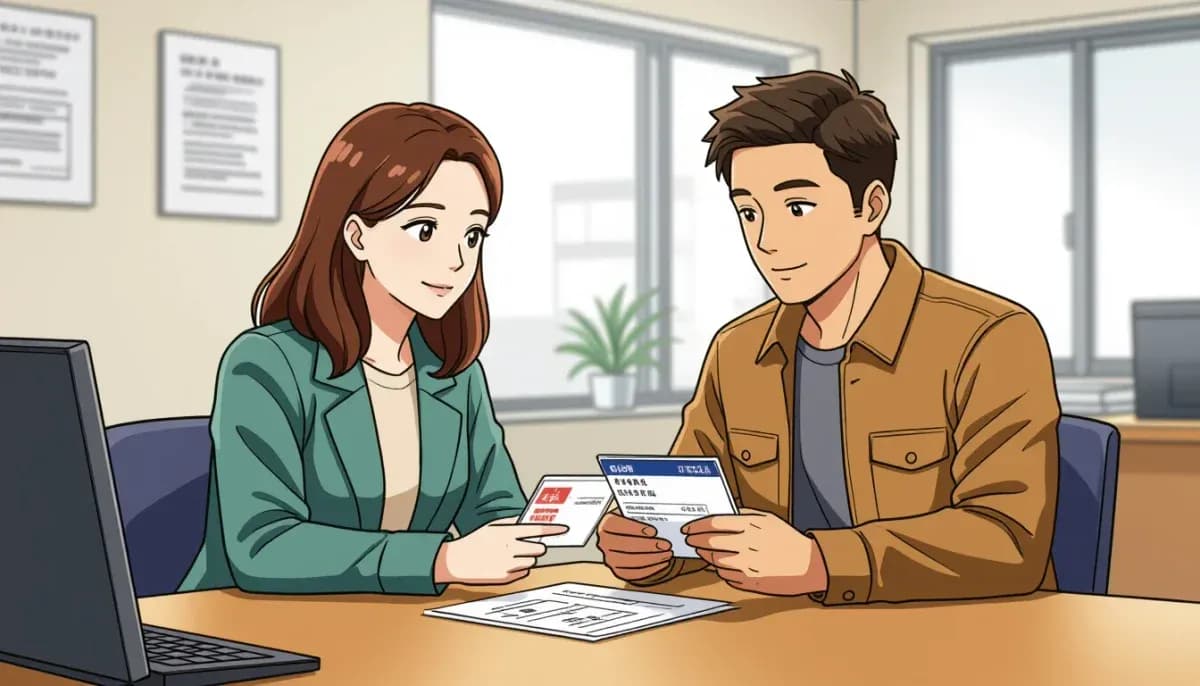
Complete guide to the paperwork required when moving between cities in Japan as a foreigner. Learn about tenshutsu todoke, tenkyo todoke, address updates, and the 14-day deadline to stay legally compliant.
Paperwork for Moving Between Cities in Japan: A Complete Guide for Foreigners
Moving between cities in Japan involves more than just packing boxes and hiring a moving company. As a foreign resident, you are legally required to complete several administrative procedures within strict deadlines — and failing to do so can result in hefty fines, loss of health insurance, or even problems with your residence status. This guide walks you through every piece of paperwork you need to handle when relocating between cities in Japan, so you can start your new chapter stress-free.
!Foreigner submitting paperwork at Japanese city hall

Understanding the Two Core Procedures
When moving to a different city or municipality in Japan, the process differs from moving within the same city. There are two key notifications:
- Tenshutsu Todoke (転出届) — Moving-Out Notification: Submitted to your current city office before or on your moving day
- Tenkyo Todoke (転入届) — Moving-In Notification: Submitted to your new city office after you arrive
If you are only moving within the same municipality (e.g., from one neighborhood to another in the same city), you only need to submit a simpler Tenkyo Todoke (転居届) (Change of Address Notification) — no moving-out certificate is required.
For international or intercity moves, both procedures are mandatory. Let's break down each step.
Step 1: Submit the Moving-Out Form (転出届) at Your Old City Office
Before or on the day you move, visit the city hall (市役所 / shiyakusho) or ward office (区役所 / kuyakusho) of your current city and submit the Tenshutsu Todoke.
What You'll Receive
After submitting, you'll be issued a Tenshutsu Shōmeisho (転出証明書) — a Moving-Out Certificate. Keep this document safe; you will need it when registering at your new city office.
Documents Needed
- Your Residence Card (在留カード / Zairyu Card)
- Passport
- My Number Card (if you have one)
- National Health Insurance Card (if enrolled)
- Seal registration card (印鑑登録証 / if applicable)
Timeline
You should ideally submit the tenshutsu todoke 14 days before your move or at the very latest on your moving day. Late submission can result in:
- Fines up to ¥50,000
- Health insurance complications
- Tax billing issues at the old address
- Problems with re-entering Japan
Submitting Online (2025 Update)
As of 2025, if you have a My Number Card (マイナンバーカード), you can submit your moving-out form online via the MyNa Portal (マイナポータル) without visiting the city office. Check your municipality's official website to confirm eligibility.
You can also submit by mail by sending the completed form, copies of your ID, and a self-addressed stamped envelope to the municipal office. Allow 1–10 business days for the certificate to arrive.
Step 2: Register at Your New City Office (転入届)
Within 14 days of establishing your new address, visit the city hall or ward office of your new city and submit the Tenkyo Todoke (転入届).
What to Bring
- Moving-Out Certificate (転出証明書) from your former city
- Residence Card (在留カード)
- Passport
- My Number Card (if applicable)
- National Health Insurance Card
- Completed moving-in form (available at the city office)
What Happens at the Office
The staff will:
- Stamp your new address on the back of your Residence Card
- Update your resident registration records
- Issue a new National Health Insurance card (if enrolled)
- Update your My Number records
Important: 14-Day Deadline
Failing to register within 14 days — or providing false information — can result in fines up to ¥200,000 and potentially jeopardize your residence status. Take this deadline seriously.
For more details on official resident registration procedures, see the Ministry of Internal Affairs and Communications guide.
Step 3: Update Your Address with Other Institutions
City hall is just the beginning. After completing your resident registration, you'll need to update your address with a range of other institutions. Most have their own deadlines and procedures.
| Institution | Deadline | Method | Notes |
|---|---|---|---|
| City Hall (Resident Registration) | 14 days | In person / Online | Priority #1 — do this first |
| National Health Insurance | 14 days | City hall (same visit) | Get new insurance card |
| National Pension (Kokumin Nenkin) | 14 days | City hall or pension office | Update address to avoid missed notices |
| Post Office | As soon as possible | In person or online | Forward mail to new address for 1 year |
| NHK | As soon as possible | Post office or online | Can be done at post office simultaneously |
| Bank Accounts | ASAP | In-branch or online banking | Required to keep accounts active |
| Driver's License | 1 month | Police station or license center | Bring new residence certificate |
| Employer / School | ASAP | HR or administration office | Required for tax and payroll records |
| Utilities (electricity, gas, water) | 1 month before / ASAP | Phone or online | Inform providers of move-out AND move-in dates |
| Smartphone / Internet | ASAP | Provider app or phone | Update billing and delivery addresses |
!Address update checklist for moving in Japan

Step 4: Updating Your National Health Insurance and Pension
When you register your new address at city hall, you can often handle the National Health Insurance (国民健康保険 / Kokumin Kenko Hoken) update at the same counter. Bring your old insurance card and ask the staff to issue a new one for your new municipality.
If you are enrolled in Shakai Hoken (社会保険) through your employer, your company's HR department handles the insurance update — you just need to notify them of your new address.
For the National Pension (国民年金), update your address through the city hall pension counter or directly through the Japan Pension Service. Failing to do so means important notices (and payment slips) will go to the wrong address.
If you have questions about healthcare in Japan more broadly, check out our guide on healthcare in Japan for foreigners.
Step 5: Post Office, NHK, and Banks
Post Office
Visit your nearest post office and fill out a 転居届 (Tenkyo Todoke) — a mail forwarding form (note: this is a different form than the city hall version). Your mail will be forwarded from your old address for one year at no charge. You can also submit this online at Japan Post's website.
Tip: Japan Post offers a combined form that handles both postal forwarding and NHK address changes simultaneously. Ask for the "郵便局の転居届" at the counter.
NHK
If you pay NHK fees, notify them of your new address by:
- Visiting the post office and using the combined mail/NHK form
- Using the NHK online address change system
- Calling the NHK customer service line
Banks
Most Japanese banks require an in-branch visit to update your registered address. Bring your updated Residence Certificate (住民票) obtained at city hall, your bankbook, your bank card, and your Residence Card. Some digital banks (like PayPay Bank or Rakuten Bank) allow address changes through their apps.
For a full overview of banking in Japan, see our banking and finance guide for foreigners in Japan.
Step 6: Driver's License and Other IDs
If you have a Japanese driver's license, you must update your address within one month of moving. Visit the nearest:
- Police box (koban) — for in-prefecture moves
- Driver's license center (運転免許センター) — for out-of-prefecture moves
Bring your:
- Updated Residence Certificate (住民票)
- Current driver's license
For your My Number Card, the address on the card itself will need to be updated at city hall — this is usually done during your tenkyo todoke registration in Step 2.
What If You Use a Proxy?
Can't make it to city hall yourself? You can authorize someone else to submit your paperwork on your behalf using a Letter of Proxy (委任状 / Ininjo). The proxy will need to bring:
- Your signed委任状
- Your Residence Card (original or copy, depending on the procedure)
- Their own photo ID
Note that some municipalities do not accept proxy submissions for certain procedures, so call ahead to confirm.
Common Mistakes to Avoid
Moving between cities in Japan is manageable, but foreigners often make a few avoidable errors:
- Missing the 14-day deadline — The most common mistake. Set calendar reminders immediately after your move.
- Forgetting the moving-out certificate — You cannot register at your new city without it. Get it before you leave your old city.
- Not notifying utilities early enough — Contact electricity, gas, and water providers at least 2–4 weeks before your move to avoid gaps in service.
- Skipping the pension update — Many foreigners ignore this, leading to unpaid contribution notices being sent to the wrong address.
- Not updating your employer — Your company needs your current address for tax filings and salary payments.
Useful Resources
For more guidance on navigating life in Japan as a foreigner, these resources are extremely helpful:
- Living in Nihon: Japanese Paperwork Guide for Foreigners — Comprehensive guide to administrative procedures
- For Work in Japan: Housing & Living Infrastructure Guide — Practical guide to settling in Japan
- Ittenshoku IT Career Transitions Japan — Career and life guidance for professionals in Japan
- MailMate: Moving to a New City in Japan — Step-by-step address registration guide
- Japan Ministry of Internal Affairs: Move In/Move Out — Official government guidance
For more tips on relocating to Japan, check out our complete guide to moving to Japan and the complete guide to daily life in Japan.
Summary: Moving Paperwork Checklist
Moving between cities in Japan requires careful timing and organization. Here's a quick recap of the essential steps:
- Before moving: Submit Tenshutsu Todoke at old city hall → receive Tenshutsu Shomeisho
- Within 14 days of arriving: Submit Tenkyo Todoke at new city hall → get Residence Card updated
- At city hall same day: Update national health insurance and pension
- Post office visit: Set up mail forwarding and NHK address change
- Within 1 month: Update driver's license, banks, employer, utilities, subscriptions
Following this process will ensure you stay legally compliant and avoid unnecessary fines or administrative headaches. Japan's bureaucratic system is thorough, but once you know the steps, it's entirely manageable — even without fluent Japanese.
If you're planning your move, also read our guide to finding housing in Japan for tips on securing your new home before the paperwork begins.

Originally from Vietnam, living in Japan for 16+ years. Graduated from Nagoya University, with 11 years of professional experience at Japanese and international companies. Sharing information about living in Japan for foreigners.
View Profile →Related Articles

Power of Attorney and Legal Representation in Japan
Learn how to create, notarize, and use a Power of Attorney in Japan as a foreigner. Covers legal representation, apostille process, costs, and how to find the right attorney.
Read more →
Japan Re-Entry Permit Do You Still Need One
Everything foreigners in Japan need to know about re-entry permits in 2025. Learn the difference between Special Re-Entry Permission and regular permits, how to apply, fees, and what happens if you forget.
Read more →
How to Get a Certificate of Eligibility for Japan
Complete guide to Japan's Certificate of Eligibility (COE): who needs it, how to apply, required documents, processing time, costs, and tips to avoid common mistakes.
Read more →
Essential Japanese Paperwork Vocabulary for Foreigners
Master the Japanese vocabulary you need to fill out official forms and administrative documents in Japan. Covers personal info, visa terms, tax forms, banking, and municipal registration with kanji, readings, and meanings.
Read more →
Name Change Procedures in Japan for Foreigners
A complete guide to name change procedures in Japan for foreigners. Learn how to update your residence card, register a Japanese alias (tsushomei), and navigate name changes after marriage or divorce.
Read more →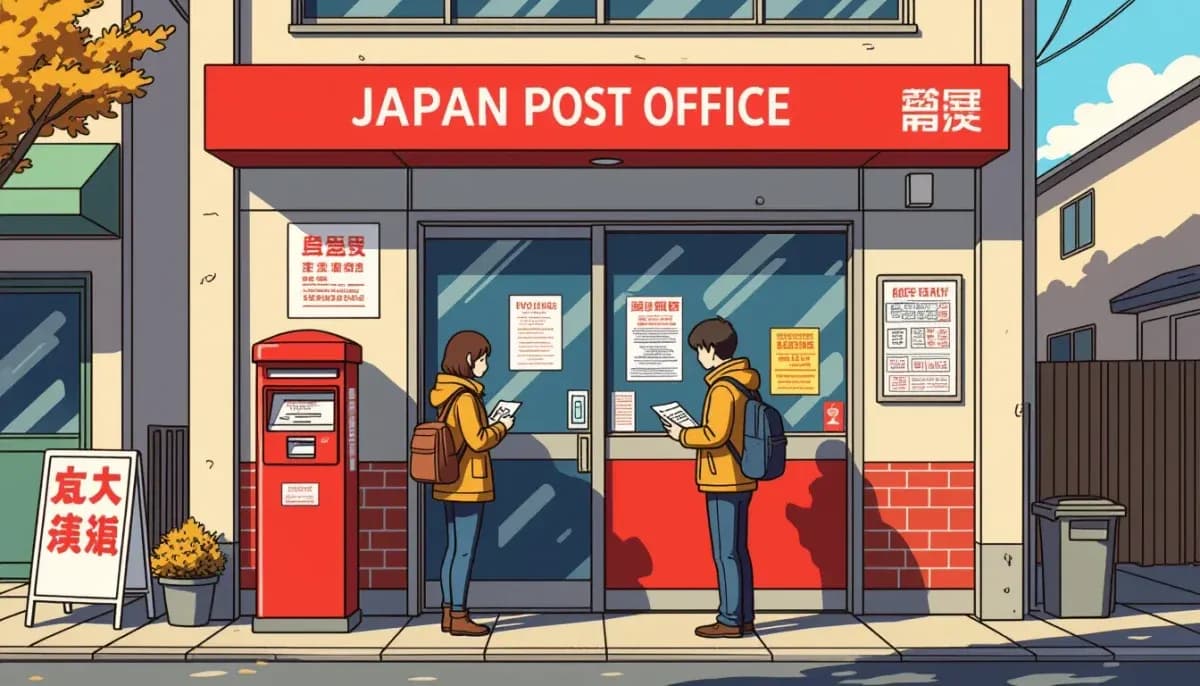
Japan Postal Savings and Official Mail Procedures
Complete guide to Japan Post services for foreigners: send domestic and international mail, open a Yucho Bank savings account, handle official mail, and manage address changes in Japan.
Read more →